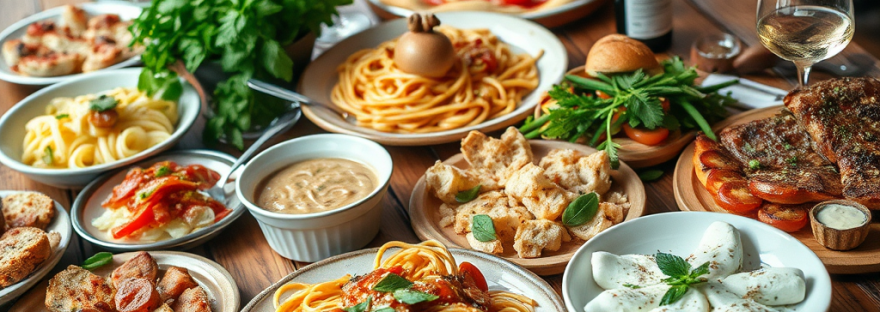
una breve guida al vocabolario della cucina italiana, utile sia per chi vuole ordinare al ristorante che per chi desidera approfondire la conoscenza della cultura e della lingua italiana.

Impara Italiano Ogni giorno di più
una breve guida al vocabolario della cucina italiana, utile sia per chi vuole ordinare al ristorante che per chi desidera approfondire la conoscenza della cultura e della lingua italiana.

If you're learning Italian and find yourself wondering when to use "Fermare", "Fermarsi", or "Smettere", don't worry - I've got you covered! "Fermare" is for physically stopping something, "Fermarsi" is the reflexive version, and "Smettere" is for permanently or temporarily stopping an action. "Stop" is reserved for abruptly stopping an action. Keep learning!

Are you confused about when to use "essere" and "stare" in Italian? Let's clear that up! "Essere" is for existence and characteristics, while "stare" is for temporary conditions and ongoing actions. Understanding this will boost your confidence in speaking Italian.

Are you ready to explore the nuances between "good" in English and "bene", "bravo", and "buono" in Italian? This article simplifies the distinct usage of these words. "Bello" describes aesthetic aspects, "buono" refers to positive qualities, while "bravo" emphasizes competence and skill. Understanding these differences will enhance your Italian communication. Start speaking like a native!
Always mixing up ci and ne in Italian? You’re not alone! This post breaks it down in a super clear way, with tons of tips and examples to help you finally get it right. If you want to sound more natural in Italian, this is a must-read! 🇮🇹✨
 Dillo in Italiano