

Ciao! 👋
Today I would like to share with you a very interesting video that I saw on the YT TedEx channel about how you can achieve fluency in a language in 6 months.
I found it interesting because Chris Lonsdale encapsulated in a very neat way all the things I already knew about speeding up fluency in a language…yes, but they are not easy to put into practice with busy everyday life.😅
What are these points? Let’s find out together!
Learning a new language is a challenge that many of us face, but what if there were a way to accelerate this process significantly? In the quest for faster, more effective language learning, he has discovered 5 principles and 7 actions that can revolutionize your language acquisition journey.
The 5 Principles of Rapid Language Learning
Relevance is Key
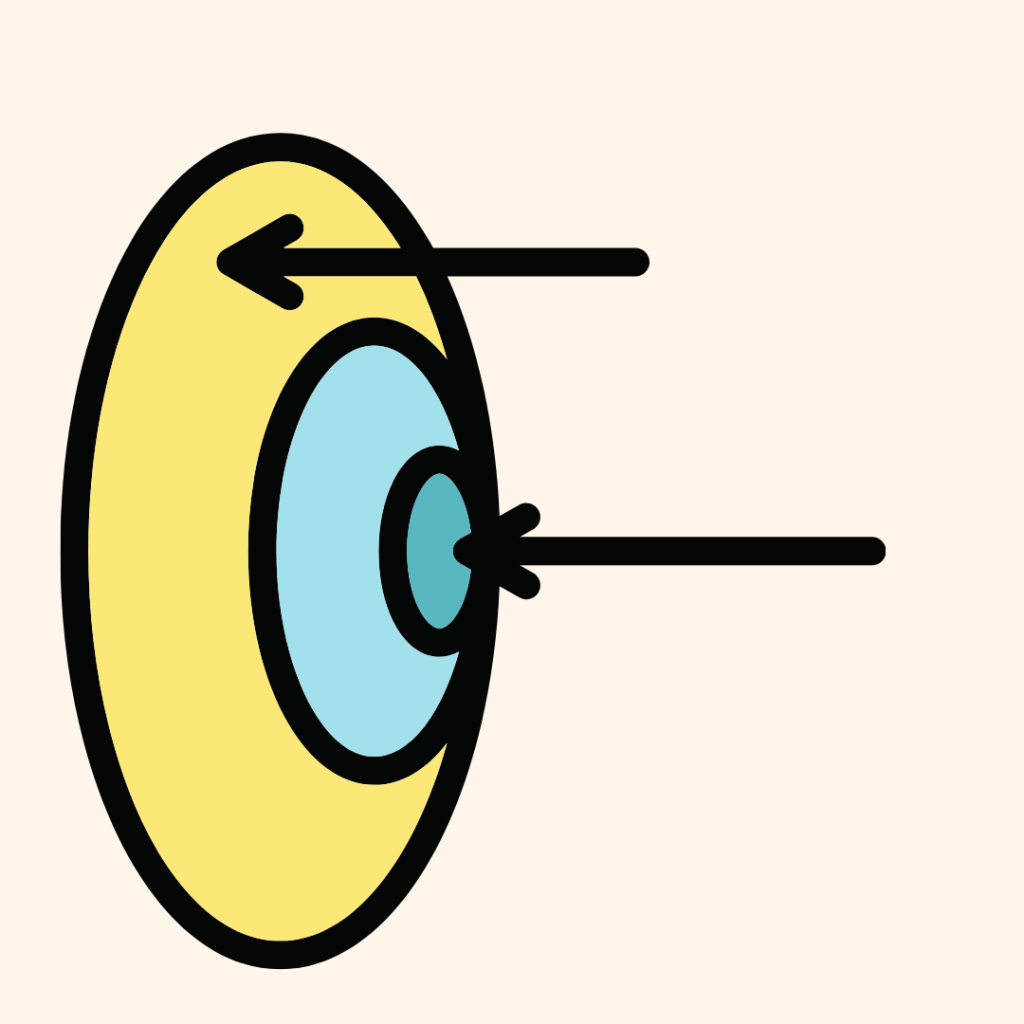
The first principle emphasizes focusing on language content that is relevant to you. By immersing yourself in topics that matter to your daily life, you create a meaningful connection with the language. This relevance ensures that you pay attention and, consequently, remember what you’ve learned.
Absolutely true.
This is something I discovered after a few months that I started teaching: everyone has their own world and based on that, they will want to improve their Italian just to get better at expressing themselves in certain areas.
Here’s the advantage of 1-to-1 lessons: with a teacher dedicated to you, you won’t have to learn words from an area of life that you don’t care about, aren’t skilled in, or whatever. For example, if you’re not interested in talking about cooking because it’s something you don’t do in everyday life because you order or go to restaurants, the teacher won’t force you to learn it. It is wasted time and energy for both of you, especially for you who after 10 minutes from the end of the lesson would have already forgotten everything
Language as a Tool

Language is a powerful tool for communication. Use it right from the beginning to express yourself and convey your thoughts. By actively engaging in conversations, you enhance your understanding and grasp of the language.
I often tell my students to use a strategy that can make you sound a little crazy, is to try to talk to yourself in Italian. Right from the start.
Come on Cristina, I’m going to sound dumb!
No if you do it by yourself, or if you put on headphones while walking around, it will sound like you are talking on the phone or giving a class 😉
This strategy served me so well in unlocking my English, because even if the words or their order was not right, I became familiar with the sound and began to create “dedicated English neurons”, which I then reinforced and improved over time.
Learning Italian is a journey, it takes so little to give it a boost, why not try?
Comprehensible Input

Understanding the message before the words is crucial. Through comprehensible input, where you absorb the meaning of phrases and sentences, you allow your brain to unconsciously acquire the language. This method mimics the way children learn their native language, making the process more natural.
This you have surely heard a thousand times before. And again, it is absolutely true.
But it only works if you listen to the language, in our case Italian, at least 4-5 hours a day.
And who has all those hours?
No one except retirees and teenagers.
Okay, we don’t have 4 hours, but maybe 2?
For example, in the home-to-work or home-to-university commute, at the gym, when you go for a run or a walk, when you do household chores, when you take the dog out.
In short, we all do automatic things that don’t require particular effort on the part of our brains, and this is where we can put a nice podcast or audio in Italian.
We do what we can with what we have.
Physiological Aspects
Language learning involves more than just words; it’s about the sounds and physiological aspects too. Pay attention to muscle coordination and facial expressions as you practice pronunciation. By observing native speakers, you can refine your own speech patterns.
This is nothing more than shadowing, a way of watching the video in small chunks and putting in pause each time to reiterate not only the words and their pronunciation, but also allows you to acquire the rhythm of the language.
This yes, requires much more time and patience, but the result is assured.
Positive Psychophysiological State

Maintaining a positive mental and physiological state is vital for efficient learning. Be tolerant of ambiguity, embrace challenges, and stay curious. A positive state of mind enables you to learn with ease and enthusiasm.
This is not always easy to realize, unfortunately.
We are so absorbed in everyday life that we forget about ourselves and how we are. We run and run and run, we want to do so many things and we want to do them all. It may last for a while but not forever.
So stop and ask yourself:
How am I today? Am I able to learn some Italian?
If the answer is yes, good, listen, speak and write.
If the answer is no, that’s okay too!
Be grateful to yourself that you were able to recognize that today is not a day for Italian, maybe it will be tomorrow or the day after. If possible, give yourself a little gift: relax, take a nice bath, do anything that doesn’t require too much effort, clear your mind!
It may even happen that after doing this, you will want to watch a 5-minute Italian video on YT because you are in the mood! Never say never 😜
The 7 Actions for Rapid Language Learning
Extensive Listening

Immerse yourself in the language by listening extensively. Surround yourself with native speakers, videos, podcasts, and other audio materials. The more you listen, the more you familiarize yourself with the language’s rhythm and patterns.
I already gave the solution a few paragraphs ago, it is not easy with today’s pace, but it is possible!
Alright, we might not have a full 4 hours, but how about 2, 1 or 30 minutes?
Consider your daily routines: commuting from home to work or university, working out at the gym, going for a run or walk, doing household chores, or even taking the dog out.
These are all moments when our brains are on autopilot, and we can easily slip in a pleasant Italian podcast or audio.
It’s all about making the most of the time we have and integrating language learning into our everyday activities.
Meaning First, Words Later

Understanding the meaning behind words is essential.
Focus on grasping the message even before you fully comprehend the words.
Use body language and context to decipher meaning.
Let’s say that it comes down to the nature of the person here: there are people who naturally believe that they cannot grasp the true meaning of a sentence without knowing the meaning of every single word, and others who do quite the opposite.
There is no right or wrong thing, just advice: if you already have not a lot of time to learn Italian, it would be a bit of a waste of time if, for example, while you are reading a book, you look up all the words you don’t know. It inevitably becomes frustrating.
So the most efficient way is to do the same thing you do when you’re listening to Italian: grasp the general meaning and even if you don’t quite grasp it…that’s okay, you’re still in touch with Italian!
Creative Word Mixing
Language is a creative process. Start mixing words creatively to form simple sentences. Don’t worry about perfection; instead, focus on communication. This creative approach enhances your language skills and builds confidence.
Yes, in other words he says nothing else what I anticipated a few paragraphs ago. Try, try, try, even on your own, but try.
By multiplying 10 words by 10 verbs by 10 adjectives you can create 1000 simple sentences!
Of course, not all 1000 will be correct because certain verbs only attract certain words, just as certain adjectives only work with certain words – this is why I pay so much attention to collocations in my IG reels -, but the important thing is to start playing with language, that not forget, is a tool.
And to learn to use it you have to make mistakes, try, make mistakes, try again…
Find a Language Parent

Having a language parent, someone who guides your understanding and communicates patiently, can be immensely beneficial. This mentor provides comprehensible input in a safe environment, fostering confidence and understanding.
No comments on this one, I’ll just leave you my link, to try a lesson for free.
Imitate Native Pronunciation

Practice pronunciation by observing native speakers. Pay attention to their facial expressions, mouth movements, and intonation. Imitating these aspects helps you sound more natural and easily understandable.
In addition to the shadowing that I mentioned before (imitating the movements of the mouth to pronounce sounds), it must be added that one should become excellent observers: both gestures and posture are different in every culture (and we are masters when it comes to gestures 😂) and trying to imitate them is nothing more than a way to,in our case, internalise Italian more.
Establish Mental Connections
Create direct connections between new sounds and existing mental imagery. Visualize the words and their meanings, forming mental pathways in your brain. These connections reinforce memory and aid in recall.
Finally, this is the last step in training the brain to associate the word and the sound with the image that we have connected to that word.
Starting from the fact that our brain thinks in images, if you use flashcards, I strongly advise you NOT to translate the word into your native language. Instead, paste an image.
Why?
Because if you translate it your brain will do the following steps:
1. It hears the word “fragola“,
2. It’ll say: “ah ok it’s strawberry”
3. Only then the image will come to mind: 🍓.
On the contrary, it’s the same thing if you want to say it:
1. you have the image of strawberry in your mind 🍓,
2. You will ONLY think of the word that indicates 🍓 in your native language
3. then (maybe) in Italian
If you don’t translate it, we skip the intermediate step and the brain will do this:
1. it hears the word “fragola” and will associate the sound with the image 🍓,
2. every time it hears or has to say the word “strawberry” it will have 2 options directly, in your mother tongue and in Italian.
I would just like to clarify that if you are just starting out it is normal, obviously the brain associates the word strawberry with your native language, it has always said it that way!
But if you have decided to learn Italian, you will need to create other dedicated neuronal cells to this… and why not make their job easier, I say? 😉
By embracing these principles and actions, you hold the key to unlocking Italian within six months.
Remember, these principles are entirely within your control as a learner. Apply them consistently, and you’ll find yourself on a transformative language learning journey.
Finally the article is finished, mamma mia quanto ho scritto oggi! (oh my how much I wrote today!)
Thank you very much if you have red it this far!
Let me know what you think of this article and if you have already tried any of these techniques: what results have you had?
Alla prossima! 👋 (See you next time!)

 Dillo in Italiano