

If you want to change language to the article click on “Select your language” on the right side of the screen if you’re on desktop or at the bottom of the page if you’re on tablet or mobile.
Ciao! 👋
Today I will continue the series of articles started here on learning styles.
I open this series with the visual type because it is the most common (in an image-obsessed society like today’s, one is somewhat “forced” to be 😅).
In fact, as many as 65% of the population are visual learners who learn best using images, graphs, colors, computers, books and other visual media.
The best way for visual learners to learn Italian (or any other language) is to incorporate visual media into their study routines, here are a few examples:
- watching a movie or television program with subtitles
- creating flashcards with pictures
- labeling objects with post-it notes
- using YouTube as a resource for free video-based language lessons
- reading interesting articles
- watching the news
- following native speakers on social media
Continua a leggere per una spiegazione approfondita di ogni metodo di apprendimento dell’italiano per gli studenti visivi!
- Watching movies or television programs with Italian subtitles
- Flashcards with images
- Labeling objects at home
- Learning vocabulary with spaced repetition flashcards
- Grammar lessons on Youtube
- Reading interesting articles online
- Follow native speakers on social media
Watching movies or television programs with Italian subtitles

🤩 TRICK TO LEARN WITHOUT NOTICING IT!
Choose a movie whose plot you already know and which interests you.
It is much easier to use a movie whose plot you already know as a resource for learning Italian.
Instead of following the plot while watching, you can just focus on the language. 😉
I recommend this because so many of my students, they start by watching Italian movies because they can’t wait to absorb some culture.
Admirable and it makes me very happy to see all this passion, but in addition to running into the problem I will describe in a moment about subtitles (there will be a lot of colloquial expressions or even dialect), there is also the frustration of understanding what is going on.
Take the path of least resistance: your brain is only able to focus on one thing at a time, especially in the beginning. 🧠
Well, having said that, let’s now move on to talk about how to watch movies and TV series effectively!
To learn properly from a foreign language television program or movie, it is necessary to watch it actively, not passively. This means writing down any new vocabulary you encounter during the viewing. I also suggest writing down any new phrases that you might use in the future.
Before moving on to the next point, I must make a very important point that no one ever talks about: it would be better not to watch TV series and movies if you are an absolute beginner.
Why not, everyone says so!
The fact is that no one considers this: when a film is translated from English to Italian, the subtitles match the English version, but the dubbing does not.
The space that must be respected with subtitles is limited, so translators will necessarily have to use other words to render the same idea and respect the timing of speech.
Or,another example, in subtitles you find written verbs in the form of tu and in speech they are given Lei: this is because, precisely, in English there is no formal while in Italian there is. And there you have the mess and the problem of not being formal enough (for us a very important thing) 😅
This thing happens less with an Italian film, unless the speech is particularly complex.
For example, you can hear this in a scene taken from the series I Cesaroni:
The boys empty the suitcase of one of the girls, and Julius says to the girl who discovers them, “Ti aiuto a mettere dentro tutto”, but you find written “Ti aiuto a sistemare”.
Going back to the previous point, the Italian language is less conceptual than English (it often happens that a word in English is almost a sentence in Italian), which is why I do not recommend watching movies or TV series to absolute beginners.
At first you do not have a large enough vocabulary to understand the concept expressed by the subtitle, and you get confused when you hear one thing and see another written.
And here comes the frustration, thinking that right now you are just starting out and you don’t need to know all these synonyms, and you end up quitting!
So what to do?
If you are absolute beginner, my advice is to watch YouTube videos, where there is a transcript, not a subtitle.
Then, when you have a solid enough vocabulary, when you have heard enough Italian, you can move on to series and movies and TV shows.
Flashcards with images
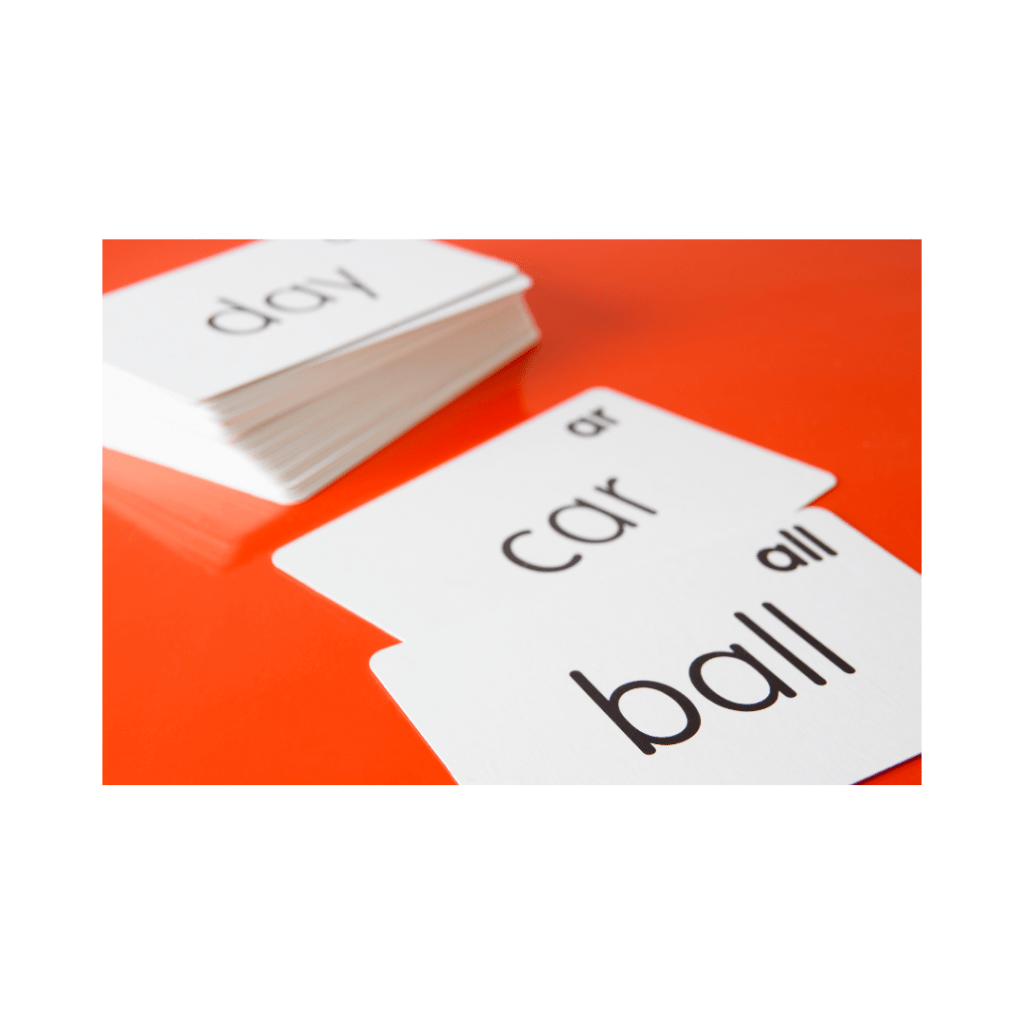
Instead of creating flashcards with only text, you can create vocabulary flashcards with pictures for definitions. This is an advantage for all kinds of learners, because it reduces the need to constantly translate or swap the target language for English. And the advantage is not just that.
The addition of images and audio (for flashcards with audio read this article) is far better than simple text flashcards, as it makes the content much more memorable. According to the image superiority effect in cognitive psychology, people tend to remember pictures much better than words.
To add images to your flashcards you can draw, print and paste them or, even easier, add images from the Internet to digital flashcards! My best known language learning applications are the famous Quizlet, Anki. I, on the other hand, who always go against the grain, use Study cards, an app that costs very little and also offers spaced repetition, which we will see in a moment.
Labeling objects at home

This tip is great for beginning students who need to learn a lot of basic vocabulary, such as household items.
Just get a packet of post-it notes, find some household items, and start looking up the word for each item in a dictionary or using a website such as WordReference.
Write the individual words on each post-it note and then attach it to the designated household object.
It is a technique that is as simple as it is interesting because , let’s take the example of the word frigo (refrigerator), once you attach the word you can begin to construct simple sentences such as “Apro/chiudo il frigo” (“I open/close the refrigerator”), then move on to “Apro il frigo per prendere lo yogurt” (“I open the refrigerator to get yogurt”), and finally: “Apro il frigo per prendere lo yogurt alla banana da portare a lavoro” (“I open the refrigerator to get banana yogurt to take to work”).
This is a very effective language learning technique for visual learners because it will help you build associations between a word and an object.
Learning vocabulary with spaced repetition flashcards

If you are going to learn Italian vocabulary with flashcards, you should apply the principles of spaced repetition to make sure you transfer the information into long-term memory efficiently.
GoodNotes already offers the ability to do that, and if you don’t care about this app, but want one just for flashcards, I recommend downloading Study cards
it’s cheap, it has spaced repetition , you can add pictures and whatever you want.
Grammar lessons on Youtube
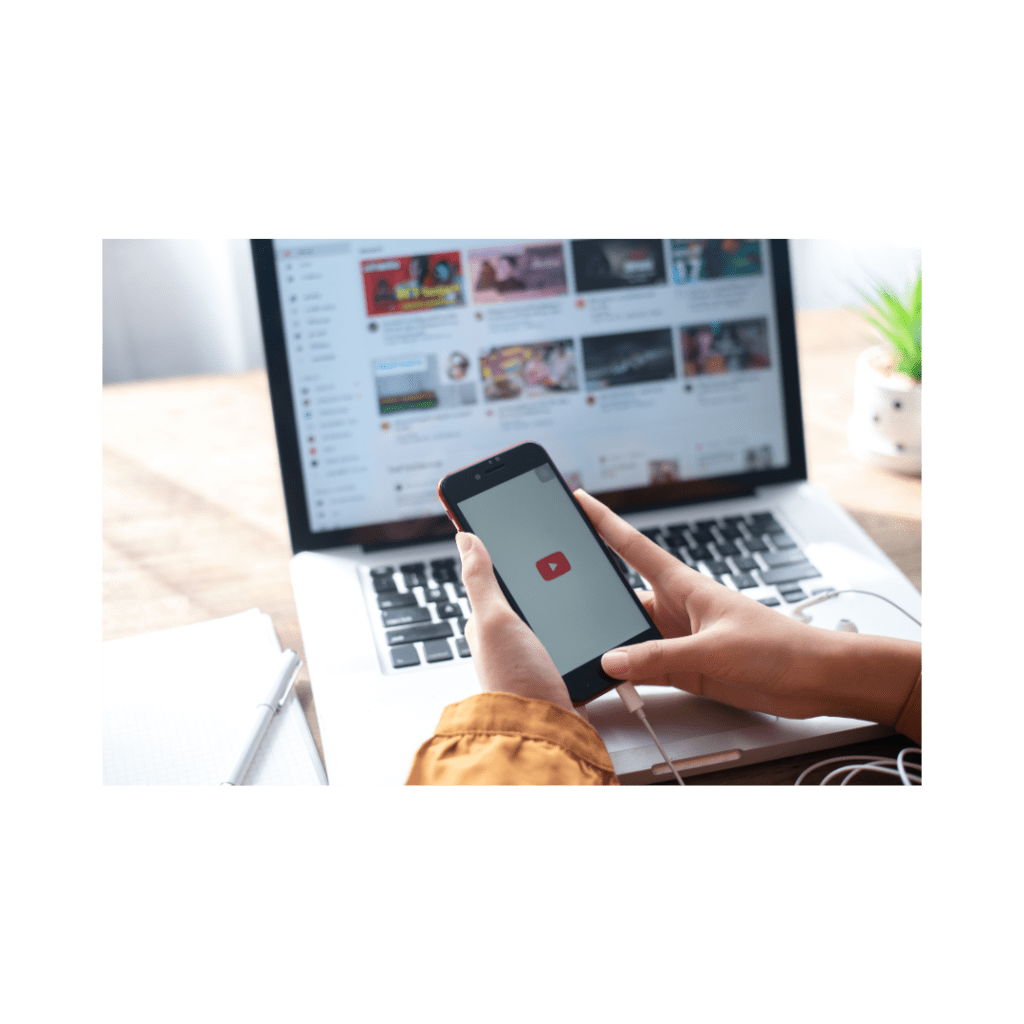
It’s a great idea to use the wide range of free grammar lessons that can be found on YouTube, taught by native Italian speakers. Because these lessons are so visual due to their video nature, you will benefit the most as a visual learner.
If you decide to start using YouTube for language learning, don’t limit yourself to “educational” videos such as structured lessons.
You should also watch entertaining videos made by native speakers or vloggers. Through these videos you will be exposed to the more colloquial and informal side of the language, which you might not learn from a textbook.
Reading interesting articles online

Reading is one of the best ways for visual learners to learn.
Fortunately, reading is also one of the main areas of language learning! I suggest you read at least one interesting online article in Italian (maybe mine? 😜), every week.
As you do this, take note of new vocabulary.
Follow native speakers on social media

Nowadays, social media occupies an important part of everyone’s life, but not many people know that you can use it to learn languages. And it’s as simple as following some native speakers!
That way, when you scroll through your feed, you’ll get little snippets of Italian every day!
Well, I hope this article was helpful to you and remember that you don’t need a conscious effort to study a little bit every day!
A little how much? At least 15 minutes a day.
How to do it? Read this article where I explain more about how to create the habit of studying Italian
Alla prossima! 👋

 Dillo in Italiano
3 pensieri su “Visual Learner? 7 Italian Learning Tools to Transform Your Experience”